The Hidden Product Lifecycle Warning That Kills New Brands
Now that you’ve built the sturdy fortress of legal and financial foundations, it’s time to plan what you’ll grow inside it. Many founders make the mistake of focusing only on “What product should I make?” without deeply considering the long-term viability.
A successful brand isn’t built on a single product but through a long-term portfolio. The start of that is understanding the product lifecycle stages.
Table of Contents
Understanding the 4 Product Lifecycle Stages
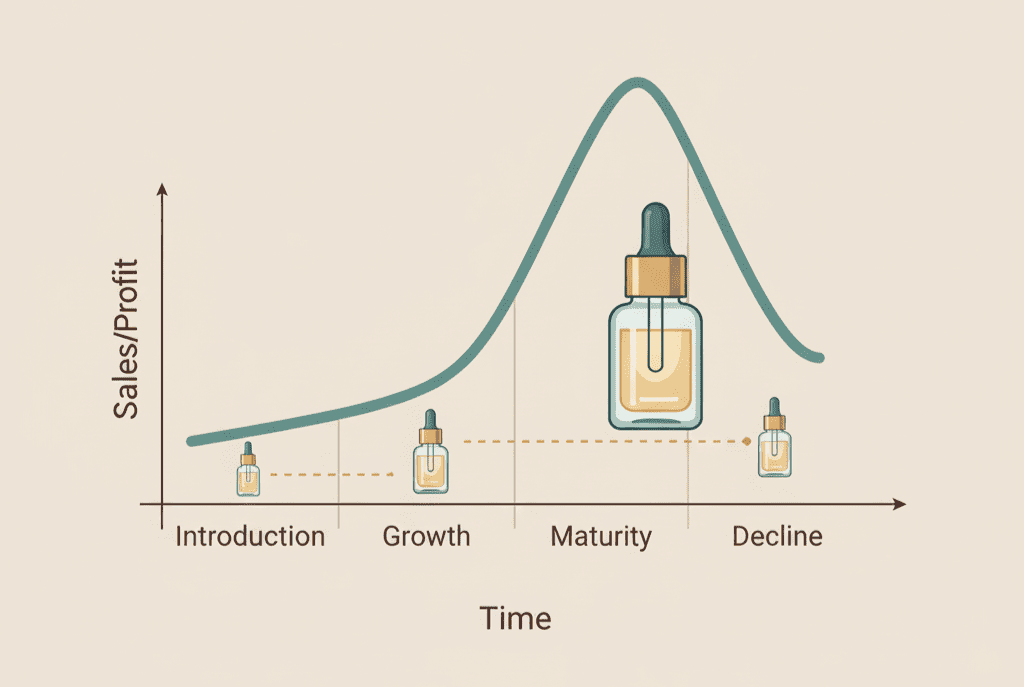
[Defining the Term] Product Lifecycle This refers to the stages every product goes through, from its market launch to its eventual disappearance. It is generally divided into the following 4 product lifecycle stages:
- Introduction: Massive amounts of time and money are invested, but sales are almost non-existent.
- Growth: The period when the product gets a good response from the market, and sales increase rapidly.
- Maturity: The period when sales growth reaches its peak and stabilizes. Competition is at its most fierce.
- Decline: Sales decrease as trends change or better alternatives appear.
Crucial Warning: Evergreen vs. Trend
The most important thing for an early-stage brand is ‘survival.’ Every time you launch a new product, enormous resources are poured into product planning, formulation development, design, and marketing.
If your first product enters the decline stage in just six months, your brand’s resources will be depleted before it ever even enters a growth phase.
Therefore, your first product should not be a flashy, trendy item (like a specific color or temporary gimmick). You must aim for an “Evergreen Product” that can be made once and sold consistently, providing a stable foundation for years.
Why You Must Avoid the Giant’s Shoulders
“My product can be used by anyone with skin!” This is the most dangerous way of thinking. A product for everyone is highly likely to end up being a product for no one.
You don’t need to fight in the same arena as giants like L’Oréal or Estée Lauder. The strategy is to avoid their shoulders and become the biggest fish in a small pond they don’t care about. That is the “niche market” strategy. (The exact steps to execute this strategy are detailed in our pillar guide, How to Find Your Beauty Niche.)
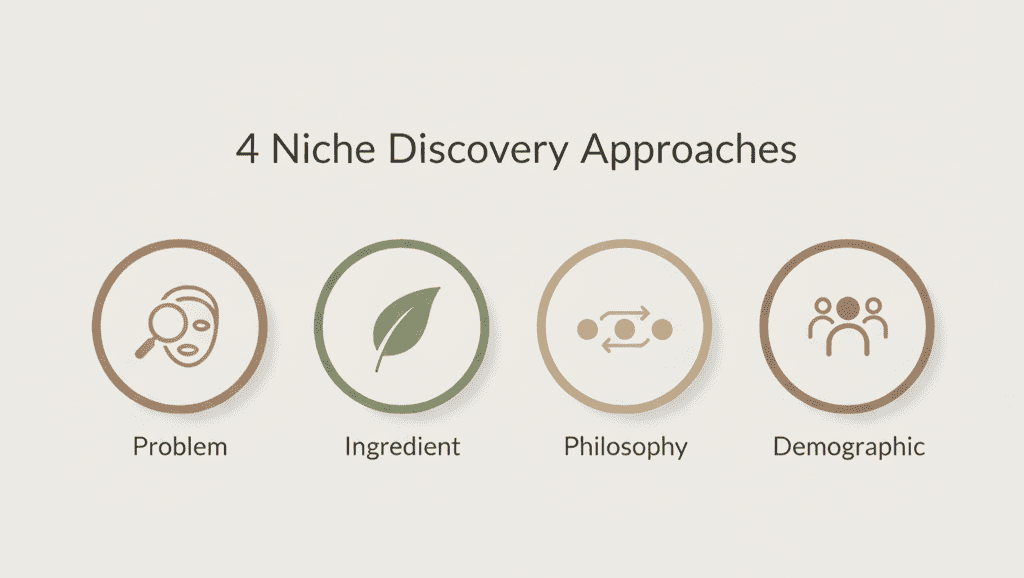
4 Approaches to Discovering Your Niche Market
To successfully apply the niche strategy and secure your evergreen product, you must determine your starting point. Here are the 4 product lifecycle stages approaches to discovery:
1. Problem-Based Approach (The Most Reliable)
Start from the ‘Pain Points’ you collected in Chapter 1. You clearly define a specific problem and present the best solution for it.
- Examples: Skincare that is ‘Fungal Acne Safe,’ or products designed specifically for ‘Maskne’ (breakouts from mask-wearing).
2. Ingredient-Based Approach
Building a brand centered around one special ‘Hero Ingredient.’ Expertise and a story about this ingredient are key.
- Brand Spotlight: I’m From succeeded by building its product lines around single ingredients from specific regions in Korea, such as ‘Ganghwa Mugwort’ or ‘Yeoju Rice.’
3. Philosophy-Based Approach
Proposing a set of values or a lifestyle that the brand stands for, beyond just the product’s efficacy.
- Brand Spotlight: Krave Beauty built a fandom by proposing ‘minimalism’—reducing unnecessary skincare steps—under the philosophy “More is not always better.”
4. Demographic-Based Approach
Creating products perfectly tailored to the lifestyle and needs of a specific customer group.
- Examples: Skincare for gamers who often stay up all night, or hormonal-change-focused skincare for menopausal women.
Next Steps
Understanding the product lifecycle stages is crucial for long-term planning. The next challenge is deciding where to place your product: Skincare, Color Cosmetics, Haircare, or Body Care.
In the next post, we will tackle the core First Product Dilemma: Skincare vs. Color Cosmetics and analyze the regulatory and cost challenges of each major category.