Bootstrapping Blueprint: 4 Proven Ways to Fund Your Brand
“Where do I get the initial capital?” This is the most realistic worry that never leaves a founder’s mind after calculating the true cost to launch a beauty brand.
While you might dream of a flashy startup raising millions, the truth is, most successful indie beauty brands start by bootstrapping.
Table of Contents
Bootstrapping 101: Define Your Strategy
[Defining the Term] Bootstrapping
This refers to starting and growing a business using only the founder’s own resources, without any external investment. It’s a metaphor for “pulling yourself up by your own bootstraps.”
This isn’t just a choice made out of a lack of money; it’s a strategic choice to protect the brand’s vision and control.
J’s Note: A significant portion of my 300 million KRW loss came from personal savings and a business loan. Even though I had an MBA, the pressure of my own money being on the line clouded all my rational judgment. If I could go back in time, I would 100% have started with crowdfunding. There is no clearer market validation than starting production with your actual customers’ money. The pre-order method also gives you one last chance to improve the formulation based on initial feedback.
4 Essential Bootstrapping Strategies for Startups
Here are the four primary bootstrapping strategies for startups you can use to fund your initial production run.
1. Personal Savings (The Highest Risk/Fastest Method)
This is the most common starting point. It’s the fastest and most direct method, but it also carries the most risk. You must never exceed the “maximum affordable loss” you calculated in the Founder Readiness Checklist.
2. Friends & Family (The Cautious Approach)
You ask for help from people close to you who believe in your vision. If you choose this path, you must get a lawyer’s help to draft a formal “Loan Agreement” that specifies the amount, interest, and repayment terms. Never mix personal relationships with business without a formal contract.
3. Pre-Orders & Crowdfunding (The Smartest Method)
This is the most ideal strategy because it simultaneously raises funds and validates your market.
- Crowdfunding: Use platforms like Kickstarter or Indiegogo to post your brand story and prototype. If you hit your funding goal, you move to production. This is a perfect pairing with a Lean Launch Strategy.
- DTC Pre-Orders: Use a platform like Shopify to create a “Coming Soon” page, collect an email list, and take pre-orders by offering a launch discount.
4. Small Business Loans & Grants (The Formal Method)
Utilize loan programs from the U.S. Small Business Administration (SBA) or find grants from non-profits for female or minority founders. The process is more complex and takes longer than other methods, but it’s one of the most formal and stable ways to secure funding.
Deep Dive: Essential Metrics for Sustainable Growth (LTV vs. CAC)
Once you’ve secured capital, you must use it effectively. The core of sustainable business growth relies on two metrics:
Customer Acquisition Cost (CAC)
Customer Acquisition Cost (CAC): The total amount you spend (ads, content, etc.) to get one new paying customer.
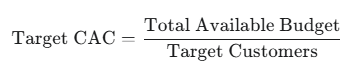
(Example: If your budget is $27,975 and your target is 2,500 customers, your Target CAC is $11.19. If your ad costs are higher than $11.19, your business is unprofitable.)
Lifetime Value (LTV)
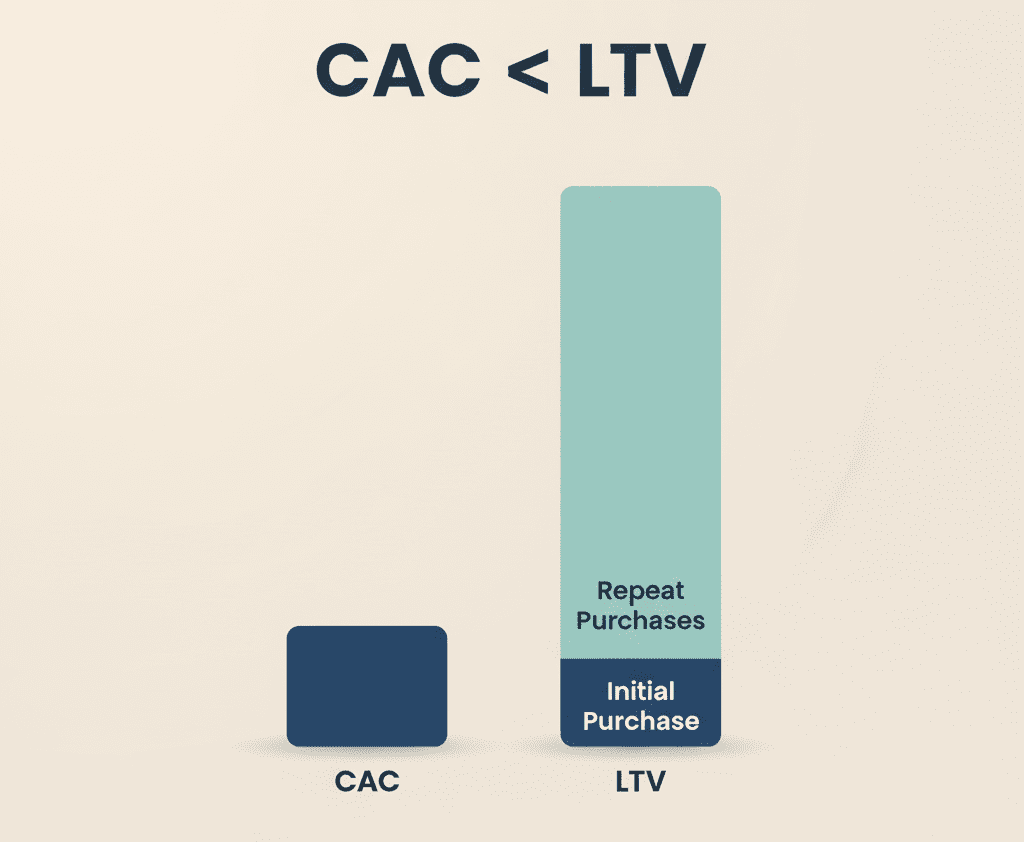
Lifetime Value (LTV): The total net profit a single customer will bring to your brand over their entire relationship.

(Example: If a satisfied customer repurchases 2 more times (3 total purchases), their LTV is $15.39 x 3 = $46.17.)
The Goal: You must always ensure that LTV > CAC. This focus on repeat purchases and a loyal “fandom” is what distinguishes sustainable bootstrapping strategies for startups from one-time sellers.
Action Plan: Your Budget Simulation Worksheet
You have seen the formulas and the strategies. The final task for this chapter is to apply them to your brand idea.
Use the worksheet below to create your own personalized launch budget forecast.
| Category | Description | Low End (Best-Case) | High End (Worst-Case) | Notes |
| I. Product Costs (COGS) | ||||
| R&D & Formulation | Sample testing, stability testing, etc. | |||
| First Production (MOQ 3,000) | Based on 3,000 units | |||
| Packaging | Container, pump, printing, unit carton, etc. | |||
| II. Operating Expenses (OpEx) | ||||
| Business Formation & Trademark | LLC formation, trademark filing fees, attorney/service fees | |||
| Website (DTC Store) | Shopify plan, theme, essential apps, etc. | |||
| Branding & Design | Logo, package design | |||
| III. Marketing Costs | ||||
| Content Creation | Product photos, video shoots | |||
| Initial Ads & Seeding | Influencers, social media ads | |||
| IV. Other | ||||
| Logistics & Warehousing | 3PL initial setup and storage fees | |||
| Contingency Fund (15-20%) | For unexpected costs | |||
| Total Estimated Initial Capital |
Completing this simulation moves you from being a dreamer to a founder with a financial plan.
Up next: We finish the planning stage by tackling the Product Lifecycle and Finding Your Niche, which is the first step toward actual product development!