The Ultimate Pricing Warning: Avoid the $15 K-Beauty Profit Killer
After calculating the true cost of launching in The Shocking Cost Unveiled: Use This Secret 7x Profit Formula, you’ve likely seen those $10–$16 K-Beauty products on Amazon and thought, “How can I possibly compete?”
You can’t. And that’s okay.
The biggest mistake a new founder can make when developing their beauty brand pricing strategy is trying to compete on price with low-cost Amazon K-Beauty. That is a fight you are destined to lose.
This post will show you why they can sell so cheaply, why you can’t copy them, and how to win by competing on your own turf: value, experience, and trust.
Table of Contents
The Amazon Game: Volume and Scale
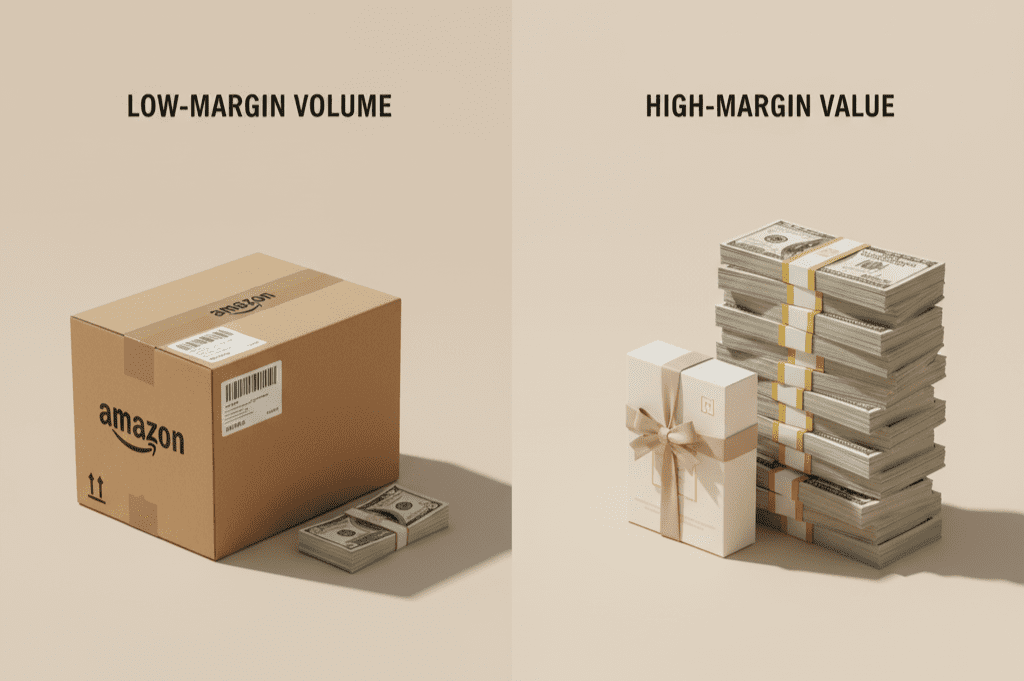
Why is Amazon’s $15 K-Beauty even possible? They are playing by a completely different set of rules. They are playing a game of ‘economies of scale’ and ‘low margin, high volume.’
| Estimated P&L for a $15 Amazon Product |
| Retail Price: $15.00 |
| COGS: $1.50 (Drastically reduced by Massive Production Volume of 100k+ units) |
| Amazon Referral Fee (approx 15%): $2.25 |
| Amazon FBA Fulfillment & Shipping: $4.50 (Average) |
| Total Margin (before ads): $6.75 |
| Final Net Margin per Unit (after ads): $3.75 |
The per-unit margin is low, but if they sell 50,000 units a month, their net profit is $187,500. This volume-based beauty brand pricing strategy is their weapon—and it’s why we cannot copy it from the start.
The Financial Trap: Why $15 is Fatal for You
If you try to adopt the Amazon model with your small indie brand:
- Your Cost Ratio: Your Landed Cost remains high (e.g., $3.50), because you only produce 3,000 units. Your cost ratio instantly exceeds 23%—far above the Golden Rule of 10-15% we discussed.
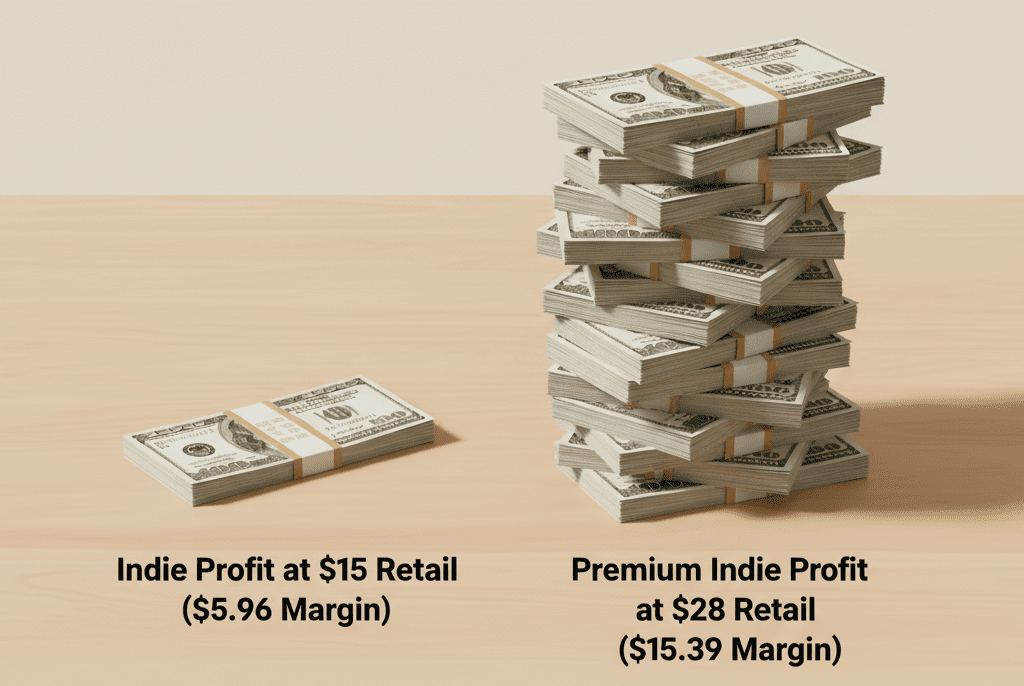
- Net Margin: As calculated below, selling at $15 leaves you with only $5.96 in net margin per unit.
- Conclusion: This is woefully insufficient. It makes paid advertising nearly impossible and severely restricts brand growth. Your brand will lose money the more it sells.
Pillar 1: Compete on Value, Not Price
Amazon sells ‘products’; you sell a ‘brand.’ Your beauty brand pricing strategy must be built on the perception of irreplaceable value.
- Founder’s Story: Your authentic founder’s story (like yours, shared in Unlock Your Brand’s Soul: The 3-Step Secret to a Captivating Founder Story) and unique philosophy are value that isn’t on the price tag.
- Uniqueness: Your concept ingredients, aesthetic packaging, and commitment to a specific niche (e.g., sustainability) allow you to justify a premium. You must make the customer want to buy your $28 ‘story of mugwort from Ganghwa Island,’ not a $15 ‘glycerin toner.’
Pillar 2: Compete on Experience
You are not competing against Amazon’s price; you are competing against the brown box experience. This focus on experience is a key component of a sustainable beauty brand pricing strategy.
- Unboxing: Create an emotional unboxing experience that Amazon’s logistics network can’t provide (tissue paper, a handwritten note, beautiful scent).
- Founder CS: A warm customer service reply from a founder, not a bot. This direct communication builds loyalty.
- Community: Build a private community where only your true fans gather to connect. This adds perceived value to the purchase.
Pillar 3: Compete on Trust
Your trust is built on expertise and commitment to your specific customer.
- Niche Focus: You are an expert who has dedicated everything to solving one specific Pain Point that your Ideal Customer Archetype (ICA) experiences. To learn more about identifying your ICA, visit resources on Niche Marketing Strategy.
- Authenticity: The ‘trust’ built from your expertise and radical transparency forms a deep bond that an Amazon product page with tens of thousands of generic reviews cannot provide.
The customer who buys the $15 product and the customer who will buy your $28 product are different people. Our goal is not to satisfy everyone, but to find that one true fan who recognizes our value.
In the next post, we’ll move beyond strategy and get tactical: we will cover how to fund your brand using bootstrapping strategies and the essential metrics (LTV vs. CAC) to ensure sustainable growth.