Stop Guessing: Use the 3-Step Golden Circle Strategy to Win
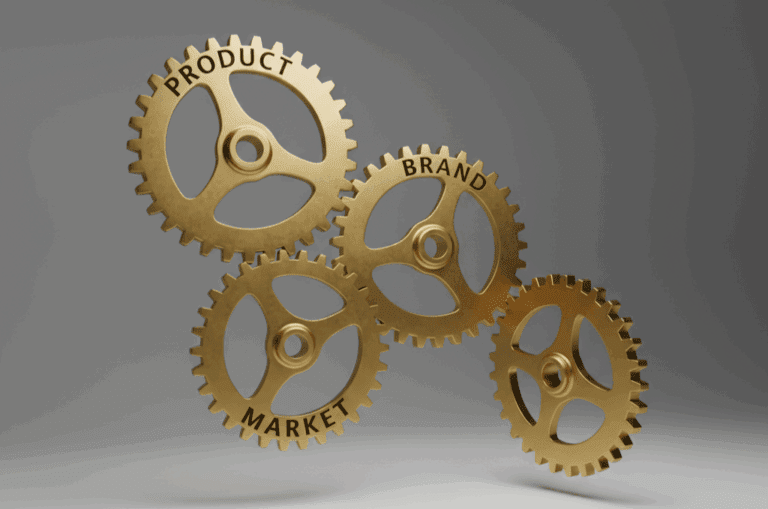
Mastering the golden circle strategy beauty startup blueprint is the final, essential step to ensuring product-market-brand alignment. You’ve defined the Product (What), the Market (Who), and the Brand (Why). Now it’s time to lock the gears into place and achieve permanent product market brand fit.
This post provides the actionable steps and the completed Ideal Customer Avatar (ICA) worksheet example you need for brand concept finalization.
Table of Contents
Action Plan: Drawing Your Golden Circle Strategy
In-depth ICA Interviews
Find 3 real people who are as close as possible to your hypothetical ICA and ask for a 30-minute coffee chat. Ask them in-depth questions about their real skin concerns, lifestyle, and the products they use. This is the process of validating your hypothesis in the real world (How to Talk to Users).
Define Your Brand’s ‘Golden Circle’
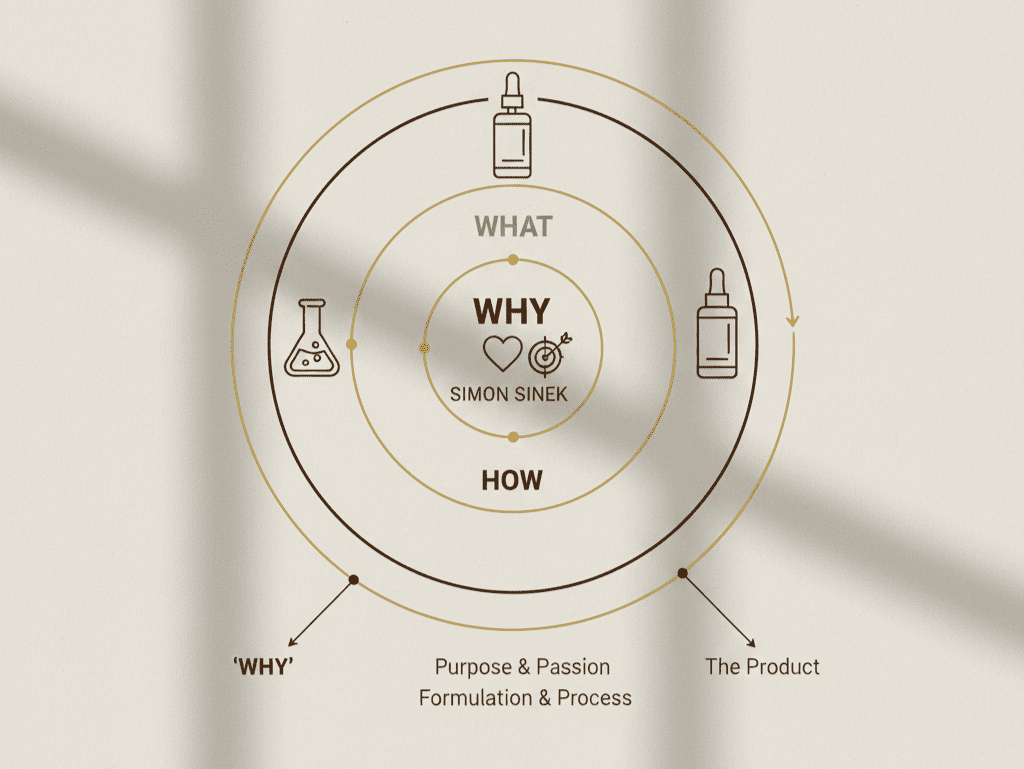
Use Simon Sinek’s ‘Golden Circle’ strategy beauty startup success is often built upon. You must define your brand in this order:
- Why (Why do you do this?): The purpose and belief that drives you. (e.g., To empower minimalists to live healthier lives by reducing choice fatigue.)
- How (How will you differentiate?): The processes and principles you follow. (e.g., By using only 5 strictly vetted natural ingredients in every formula.)
- What (What do you sell?): The tangible product. (e.g., We sell an all-in-one essence.)
Linking the Golden Circle to R&D Decisions (Expansion)
The golden circle strategy beauty startup plan is not just for marketing—it dictates R&D investment.
- The ‘Why’ Saves Money: If your ‘Why’ is strong (e.g., Sustainably focused), you eliminate budget debates over cheap plastic packaging immediately.
- The ‘How’ Defines Formulation: If your ‘How’ is Minimalism (5 Ingredients), your R&D focus is immediately streamlined to stability testing on only those core actives, reducing complexity and formulation time.
- The ‘What’ Sets the Scope: The ‘What’ keeps your manufacturer brief clear and prevents scope creep.
Fit-Check Questions: Is the Alignment Perfect?
This is the final test for product market brand fit. Look at your completed product concept, ICA, and brand, and ask yourself these questions:
- “When my ICA encounters this brand, will they feel, ‘This is totally my story!‘?”
- “Are this product’s design and price attractive to my ICA?”
- “Does the Why (Brand) justify the What (Product) to the Who (Market)?”
Worksheet Example: Ideal Customer Avatar (ICA)
Before you proceed, you must complete your own ICA worksheet, drawing inspiration from this filled-in example:
| Category | Details |
| Name | Chloe |
| Age | 32 |
| Job | UX Designer at a tech company |
| Pain Points | – Skin is dull and rough from frequent late-night work. – No time for a multi-step skincare routine. – Cares about ingredients but feels fatigued by too much information. |
| Values | – Ethical consumption, opposes animal testing. – Trusts brands that are transparent and honest. – Willing to pay a bit more if it aligns with her values. |
The True Cost of a Mismatched Fit (Expansion)
If you define your ICA as ‘Chloe’ (who values transparency and pays a premium) but your product is housed in cheap, untraceable plastic (mismatched Product/Brand), you destroy the emotional connection. This results in high CAC and low LTV, proving that the lack of product market brand fit is a fatal business error.
Final To-Do List
- Complete the detailed Ideal Customer Avatar (ICA) worksheet for your brand.
- Define the brand’s ‘Golden Circle (Why, How, What)’ on a single page, mastering the golden circle strategy beauty startup blueprint.
- Write down the answers to the ‘Fit-Check Questions.’